We have no AI expertise in house. Is that a problem?
No. SynaLemma comes with one or more dedicated forward-deployed engineers, depending on the size of your project, from the team that builds it. They work alongside your team to deploy it, handle your data, and write and verify your definitions with your experts.
Is the model not still reasoning when it writes the rule?
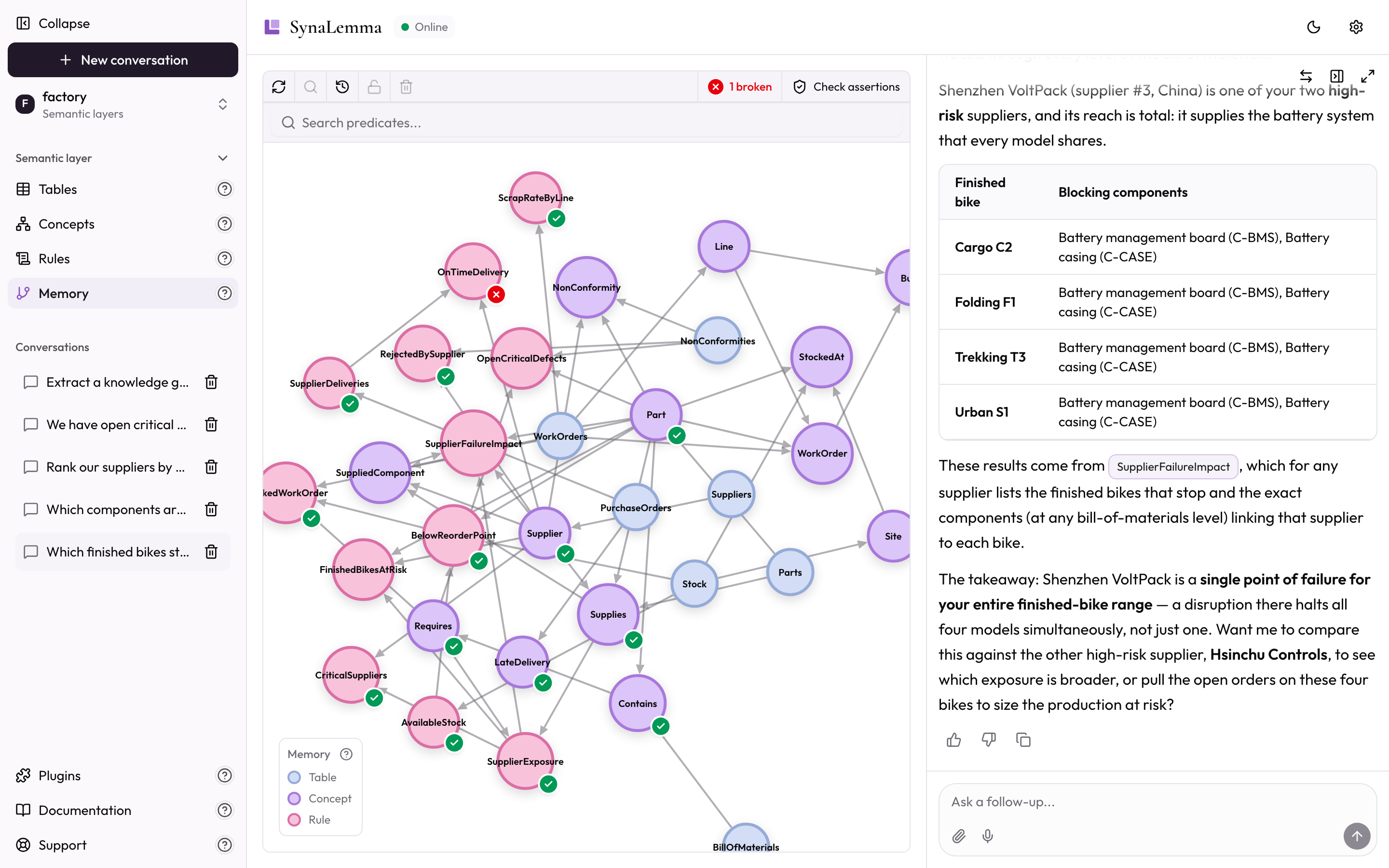
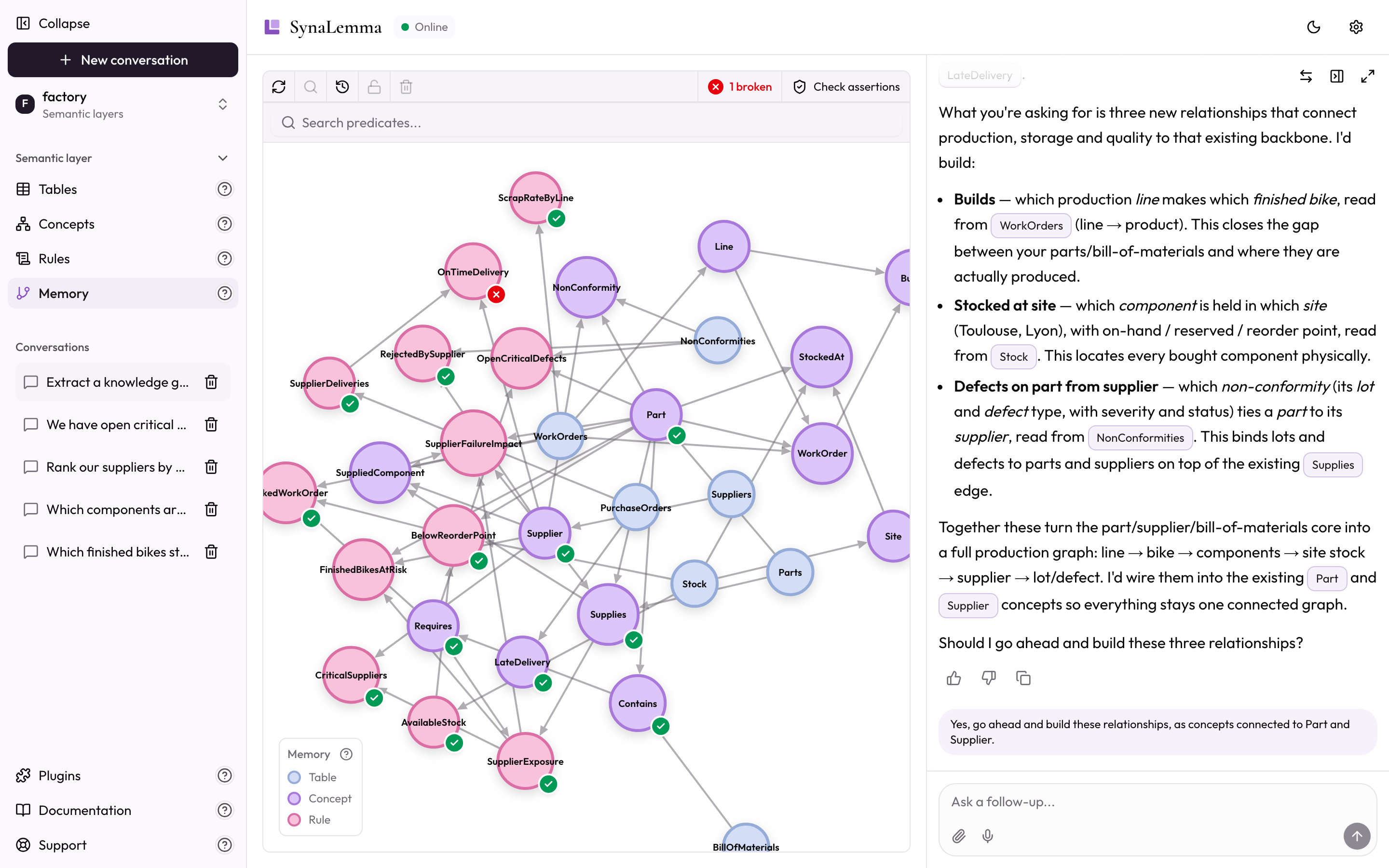
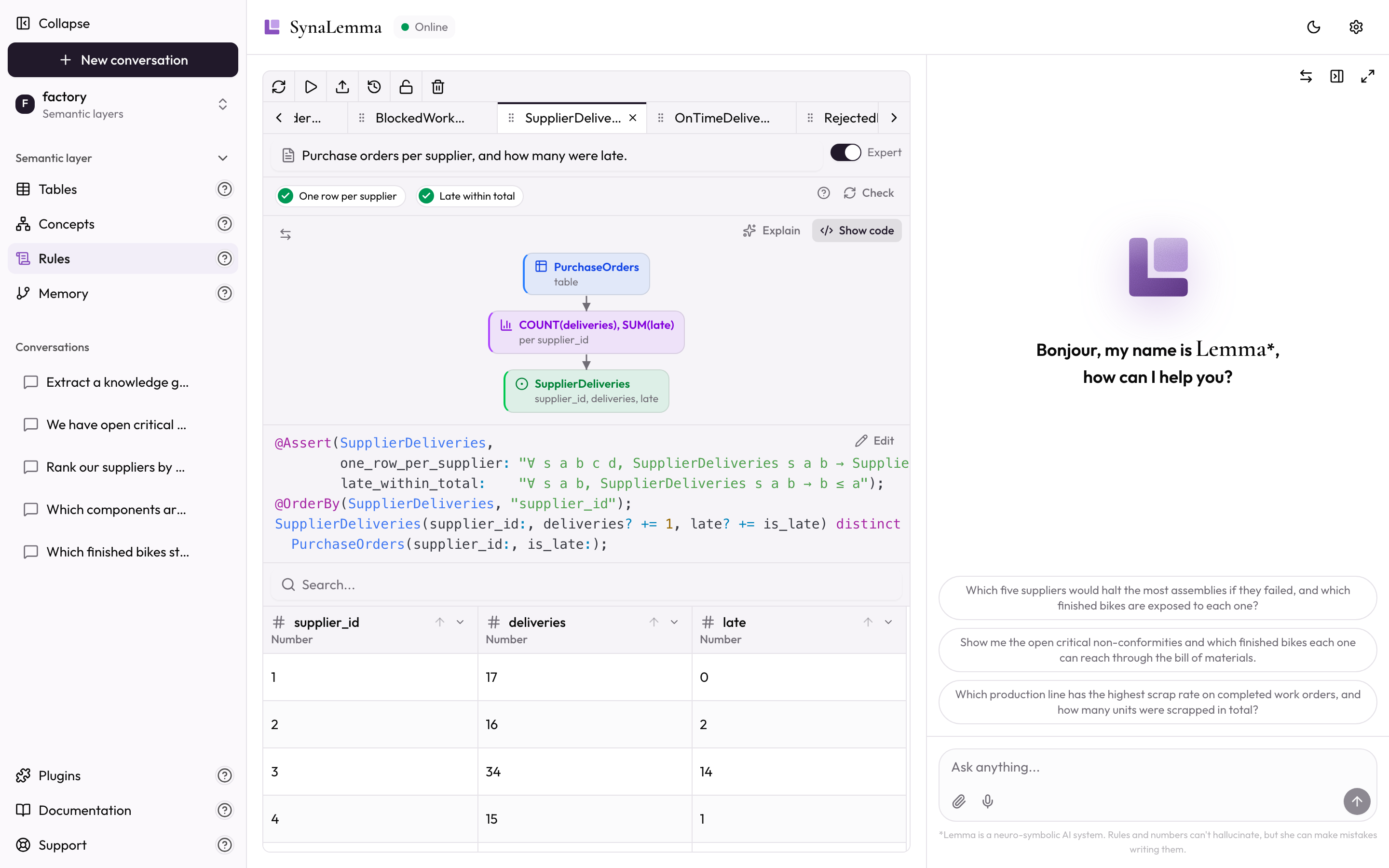
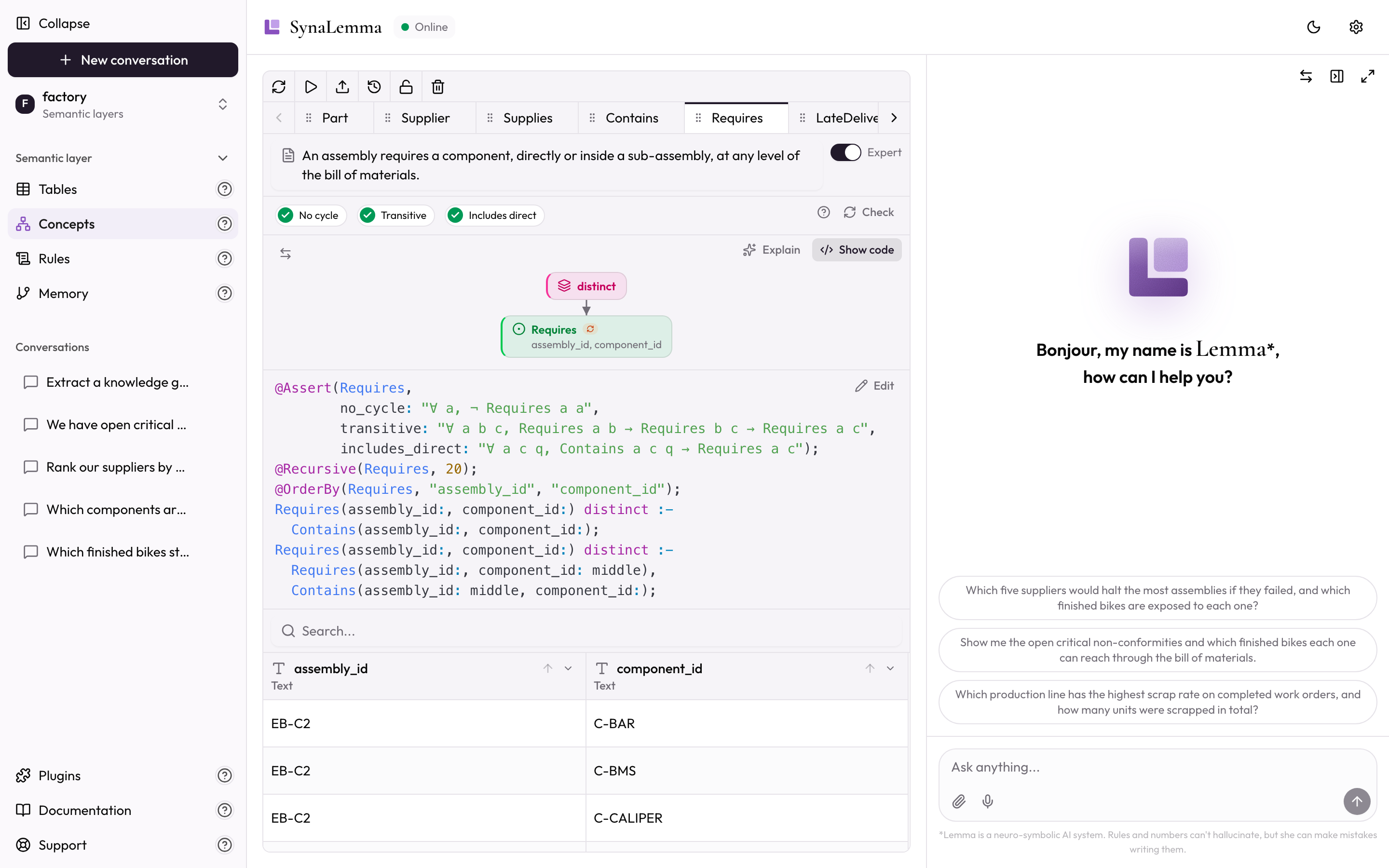
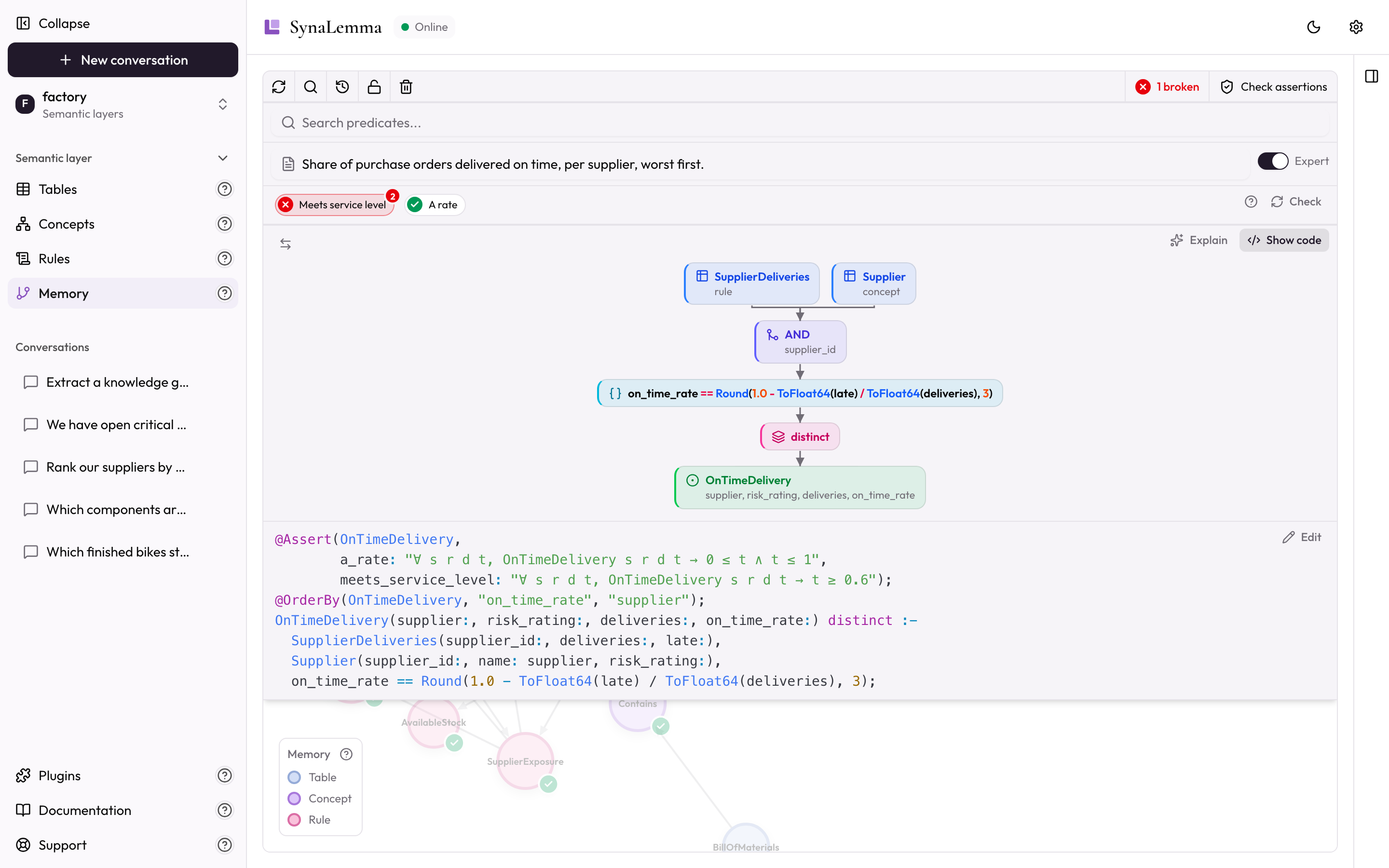
It decides what to ask the engine: which concepts to combine, and how. That decision is written down as a rule you can read, and the engine, not the model, derives every row from it. If the decision is wrong, it is wrong in a place you can see, correct once, and lock.
Is SynaLemma open source?
The three engines it is built on (Synalinks, Synalog, Semantic Layers) are open source under Apache-2.0. SynaLemma itself, the product that assembles them, is proprietary and sold under a commercial licence. Your rules are files in the open format, so they are never locked in.
Which databases does it work with?
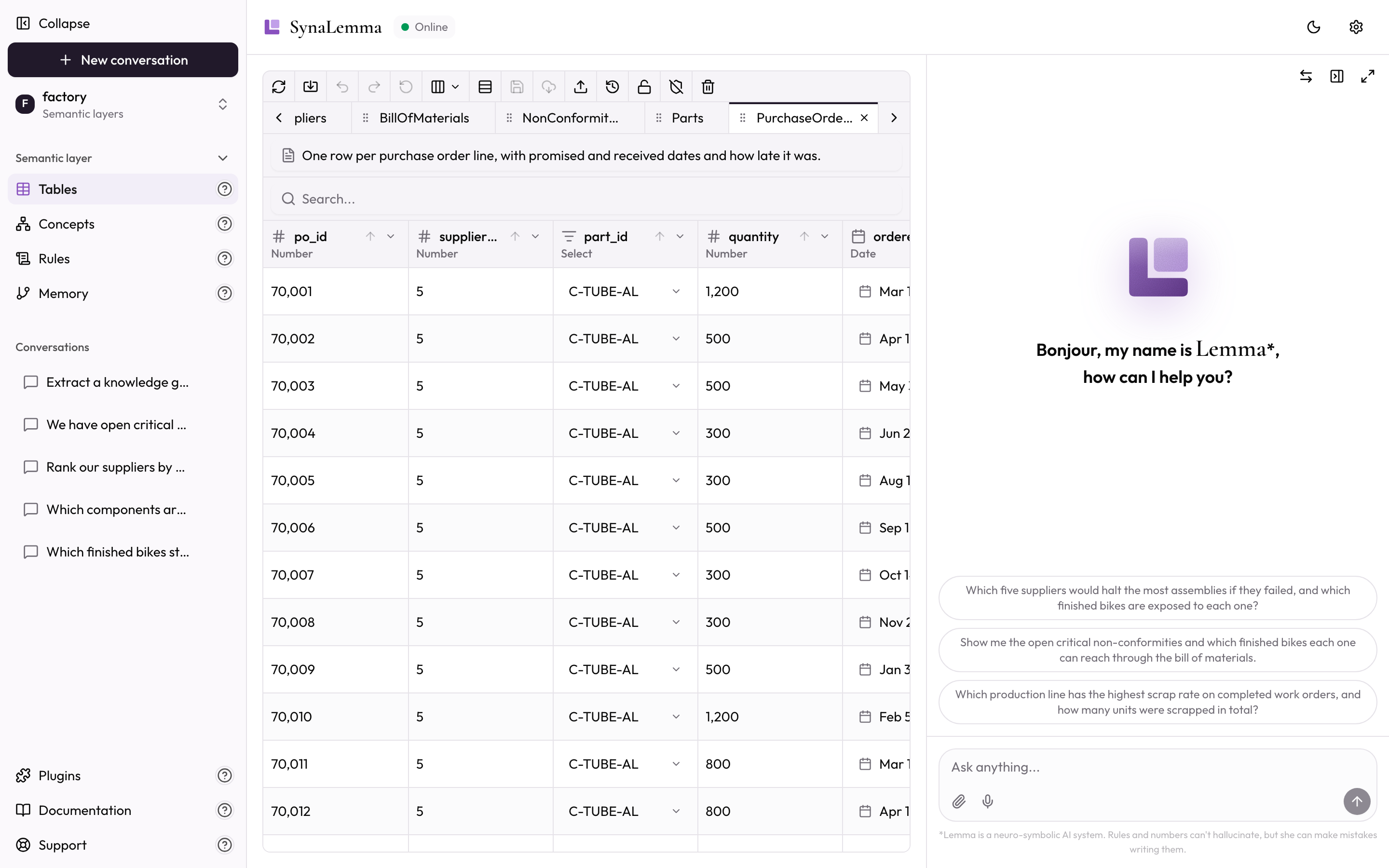
PostgreSQL, BigQuery, Databricks, Trino, Presto, DuckDB and SQLite, queried in place: your tables stay where they are. And files: CSV, Excel, JSON, JSONL and Parquet. One rule compiles to the SQL dialect of whichever engine it runs on.
Which language models?
Any model that supports tool calling, chosen from a catalogue in the settings: open models served locally through Ollama, vLLM or LM Studio, or hosted providers such as Mistral, Anthropic, OpenAI or Google. Changing model does not change the rules. Everything except the conversation itself works with no model at all.
What if the model writes a wrong rule?
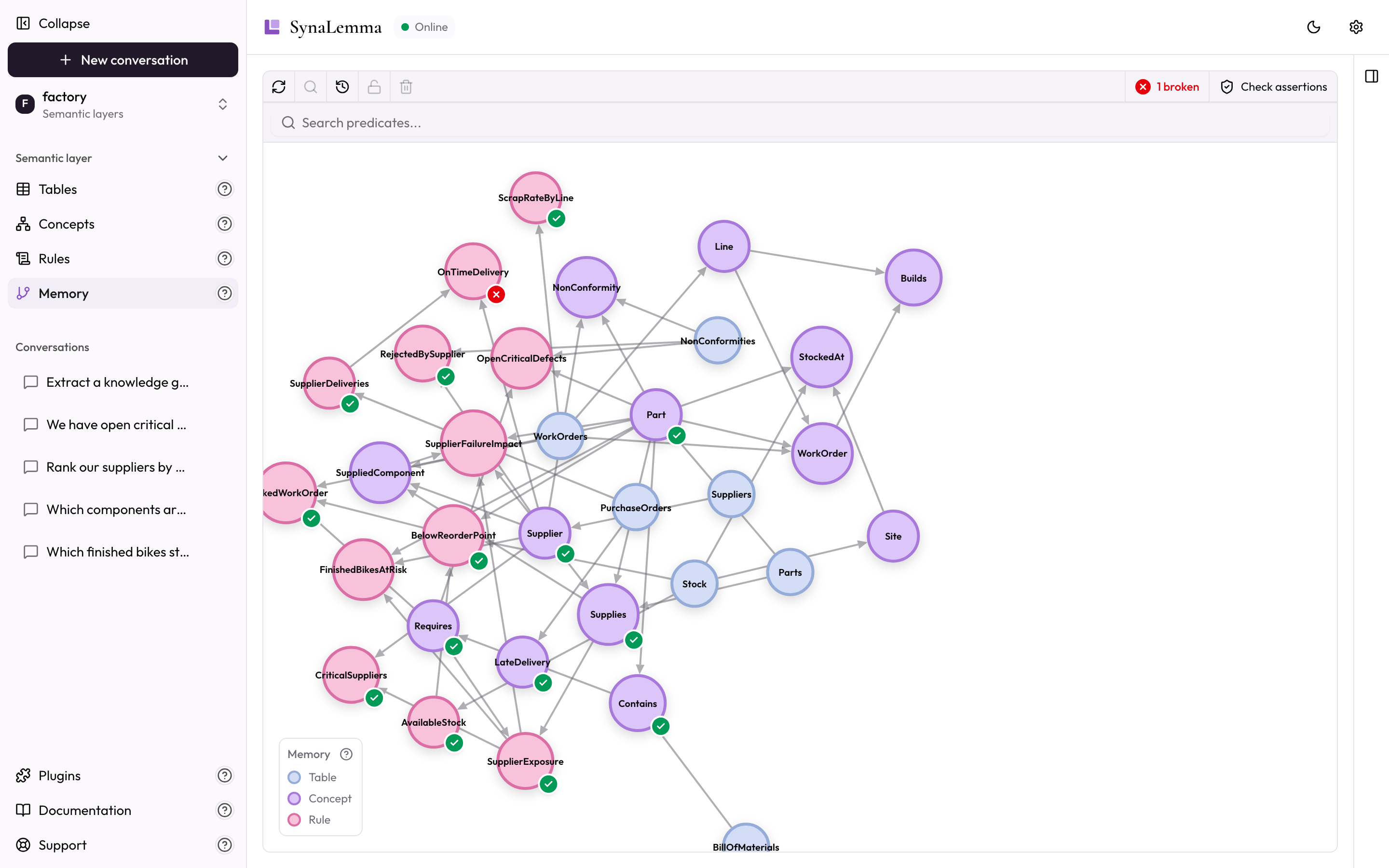
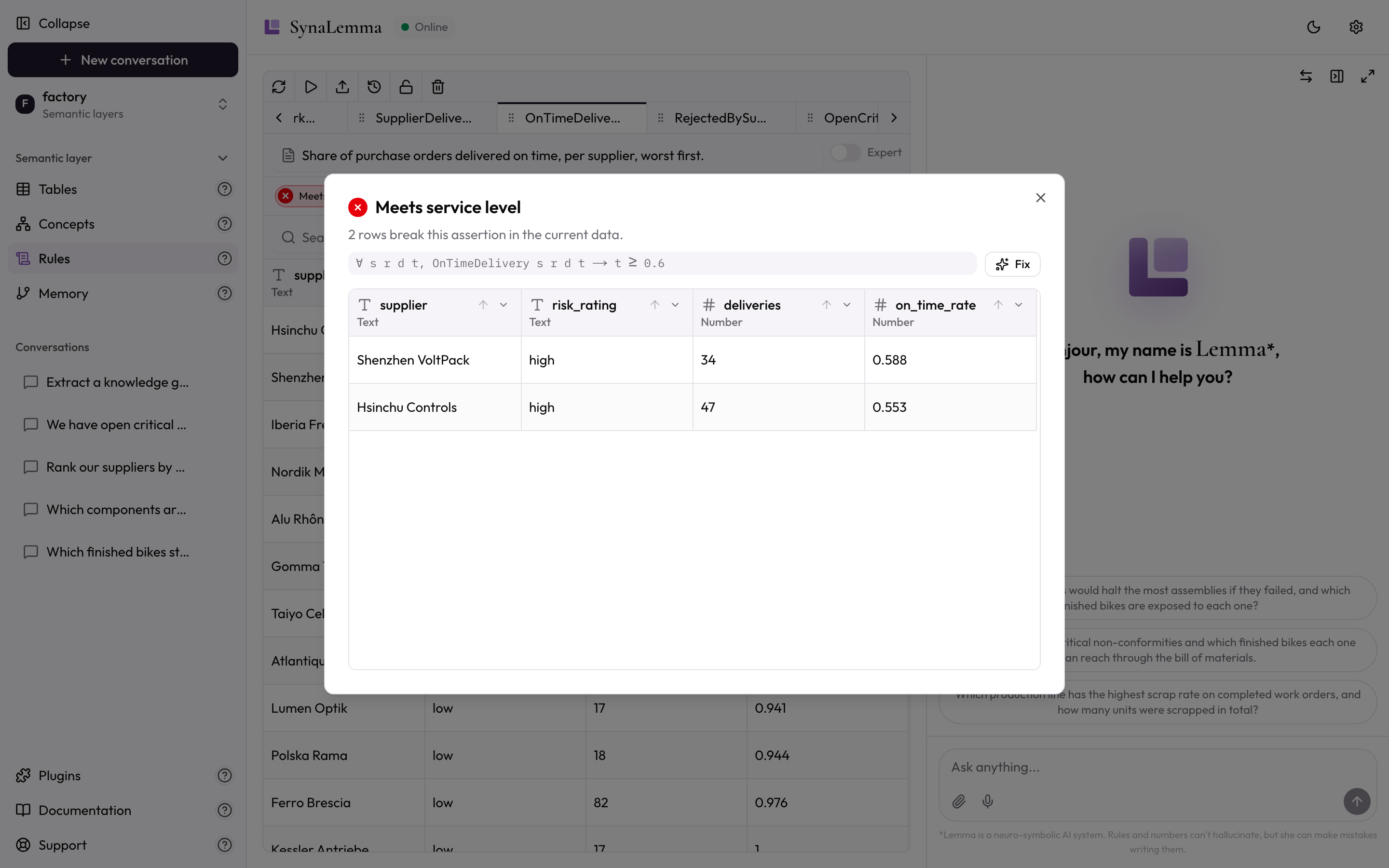
A structurally wrong rule is refused by the verifier. A rule that contradicts an assertion is flagged with the rows that break it. And because the rule is readable, the person who owns the number can see it and correct it. That is not possible when the answer is a paragraph of prose.
Does it replace our dashboards?
No. SynaLemma draws no charts: answers are figures, tables and the rules behind them. It gives the definitions behind your dashboards one place to live, and lets people and agents ask questions in plain language against them.